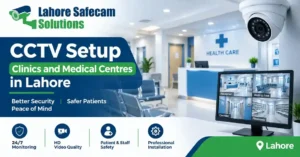
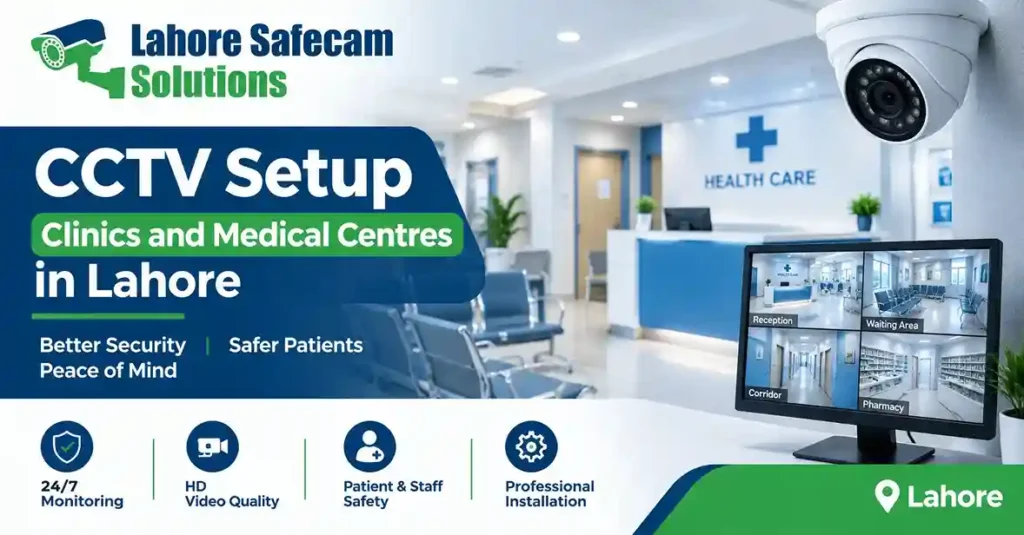
A clinic needs security, but it also needs discretion. Patients may arrive worried, unwell, or discussing information they expect to remain private. Staff handle medicines, payments, records, and restricted areas throughout the day. This makes CCTV planning in a medical environment different from installing cameras in an ordinary shop or office.
A suitable 2MP CCTV setup for clinics in Lahore should provide clear coverage of entrances, reception areas, waiting spaces, and controlled access points without unnecessarily monitoring private clinical activity. Camera placement, authorised access, recording storage, remote monitoring and backup power should all be considered together. The aim is not to record every corner. It is to create useful security coverage while respecting the nature of a healthcare environment.
Start by Separating Public and Private Areas: CCTV for Clinics in Lahore
The easiest way to approach clinic surveillance is to divide the property according to how each area is used. A reception desk and a consultation room do not have the same purpose. Neither should automatically have the same level of CCTV coverage. The public side of a clinic may include the clinic entrance, reception area, waiting room, pharmacy counter and corridors. These are locations where patients, visitors and staff move regularly, so CCTV can support general security and incident review. The private side may include consultation rooms, examination areas and spaces where confidential discussions or treatment take place.
That distinction matters. International healthcare CCTV policies commonly emphasise that surveillance should have a defined purpose and should take privacy and dignity into account. For example, NHS healthcare guidance treats patient-facing surveillance as something that requires careful consideration of privacy, access and purpose. This is UK guidance rather than Pakistani law, but the underlying privacy principle is relevant when designing CCTV for a healthcare environment. For a Lahore clinic, this means asking a simple question before installing each camera: What security purpose does this camera serve? If there is no clear answer, the position may need reconsideration.
The Clinic Entrance Should Provide Identification, Not Just Movement
A camera above the entrance is useful only if the footage gives enough detail when someone enters or leaves. A very wide view may show movement but make faces too small to identify. A camera placed too high may mostly capture the tops of people’s heads. The entrance camera therefore needs a deliberate angle. Lighting also matters. Many clinics have glass doors or bright exterior light during the day.
If a camera faces directly towards strong sunlight, faces entering the building may appear dark. For medical centre CCTV in Lahore, entrance coverage should be tested during different lighting conditions rather than judged only from the installation screen. The objective is simple: if footage is reviewed later, it should provide meaningful information.
Reception Needs Security Without Capturing More Than Necessary
Reception is usually one of the busiest parts of a medical facility. Patients check in, appointments are confirmed, staff work behind the counter, and payments may be handled nearby. A well-positioned camera can monitor activity around the desk and the approach to the reception area. However, it should not be aimed unnecessarily at computer screens, medical documents or other information that has no security purpose.
This is where patient privacy and security need to work together. International surveillance guidance recommends limiting CCTV coverage to what is genuinely required and restricting footage access to people who need it. For clinics, that principle makes practical sense even beyond formal legal requirements. Security does not improve simply because a camera sees more.
Waiting Rooms Need Context Rather Than Close Surveillance
A waiting room usually needs broad situational coverage. The purpose may be to understand movement, review an incident, or see who entered and left a shared area. It normally does not require a camera positioned closely towards individual seats. For CCTV cameras for clinics, a wider view of the waiting area can often provide the required context while being less intrusive.
This approach also helps avoid unnecessary overlap between cameras. If three cameras are recording almost the same section of the waiting room while a side corridor remains uncovered, the system has more hardware but not better security. Useful CCTV design is largely about eliminating meaningful blind spots, not filling every wall with cameras.
Pharmacy and Medicine Storage Areas Need Controlled Coverage
Some clinics operate an internal pharmacy or maintain areas where medicines and other controlled stock are stored. These spaces introduce a different security requirement. A camera may be positioned to monitor the pharmacy counter, stockroom entrance, or access route rather than recording sensitive patient activity nearby. The goal is to establish who accessed the area and when. If medication storage is behind a restricted door, pairing CCTV with appropriate physical access controls can be more useful than relying on video alone. A camera records an event. A controlled door can help prevent unauthorised entry in the first place. This is why clinic security should be viewed as a system rather than a collection of cameras.
Staff Entrances and Restricted Corridors Should Not Be Forgotten
Most attention naturally goes to the main patient entrance, yet many medical centres have a separate staff entrance, rear door or service access point. These locations may remain active outside normal patient hours. A side entrance can therefore deserve the same level of attention as the front door, particularly if it leads towards stock, records or administrative areas. Corridors serving consultation rooms may also benefit from carefully positioned CCTV. The distinction is important: monitoring the corridor outside a consultation room is very different from recording the consultation itself. For privacy-sensitive environments, that boundary should be deliberate.
Consultation and Treatment Areas Require Extra Caution
Medical consultations are inherently private. That makes consultation rooms, examination areas and treatment spaces very different from entrances or waiting rooms. A clinic should not automatically install cameras in these areas simply because CCTV is being installed elsewhere in the building. Healthcare privacy guidance from organisations such as NHS England warns that visual recording can expose other patients or confidential information and potentially cause privacy concerns.
Again, this guidance does not define Pakistani law. Clinics in Lahore should seek appropriate professional or legal advice where CCTV use may affect sensitive clinical areas. From a practical security perspective, many risks can instead be addressed by monitoring entrances, corridors and controlled access points. That often provides useful evidence without placing cameras inside private care spaces.
Choose DVR or NVR Around the Clinic, Not the Sales Package
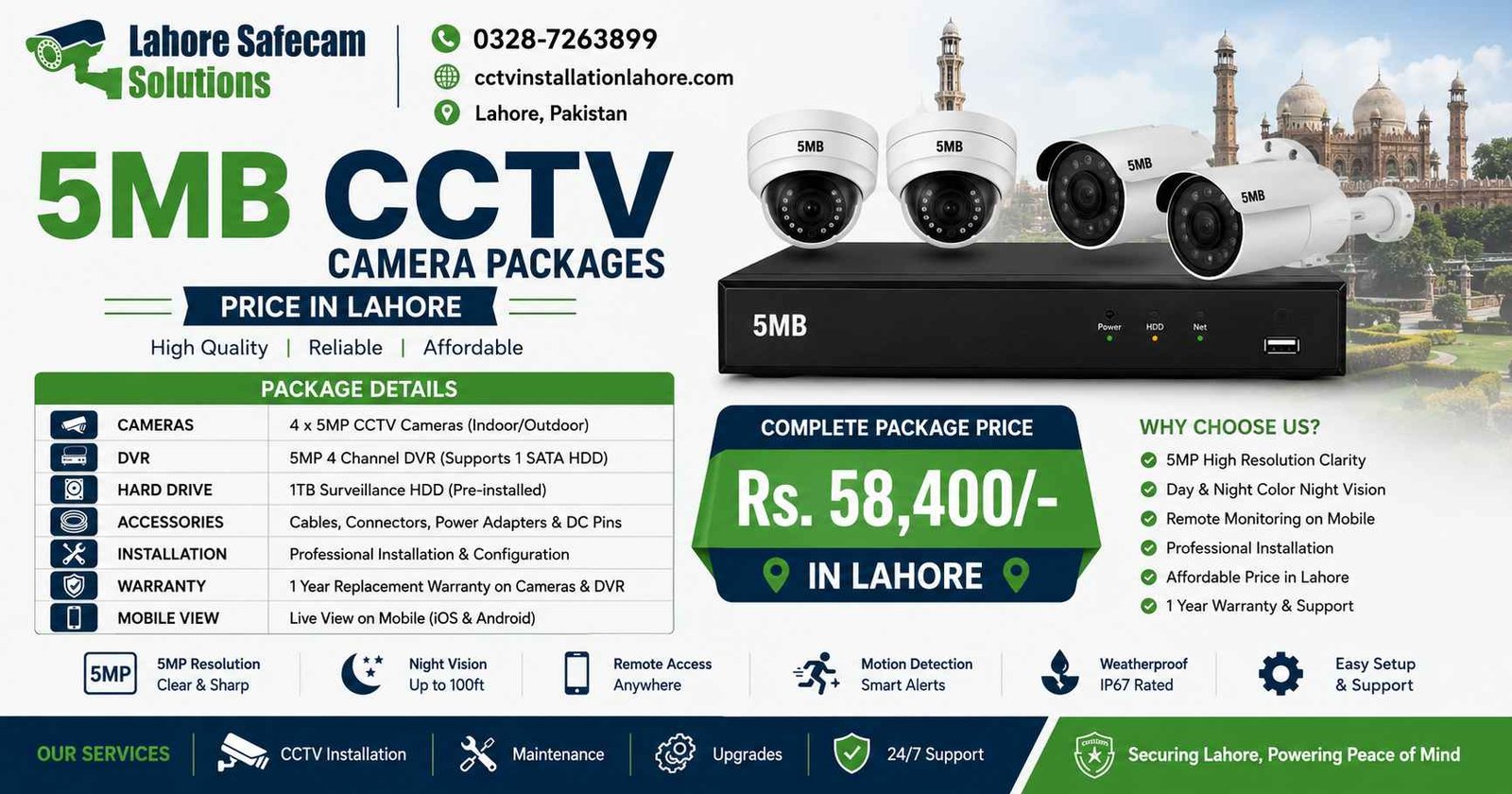
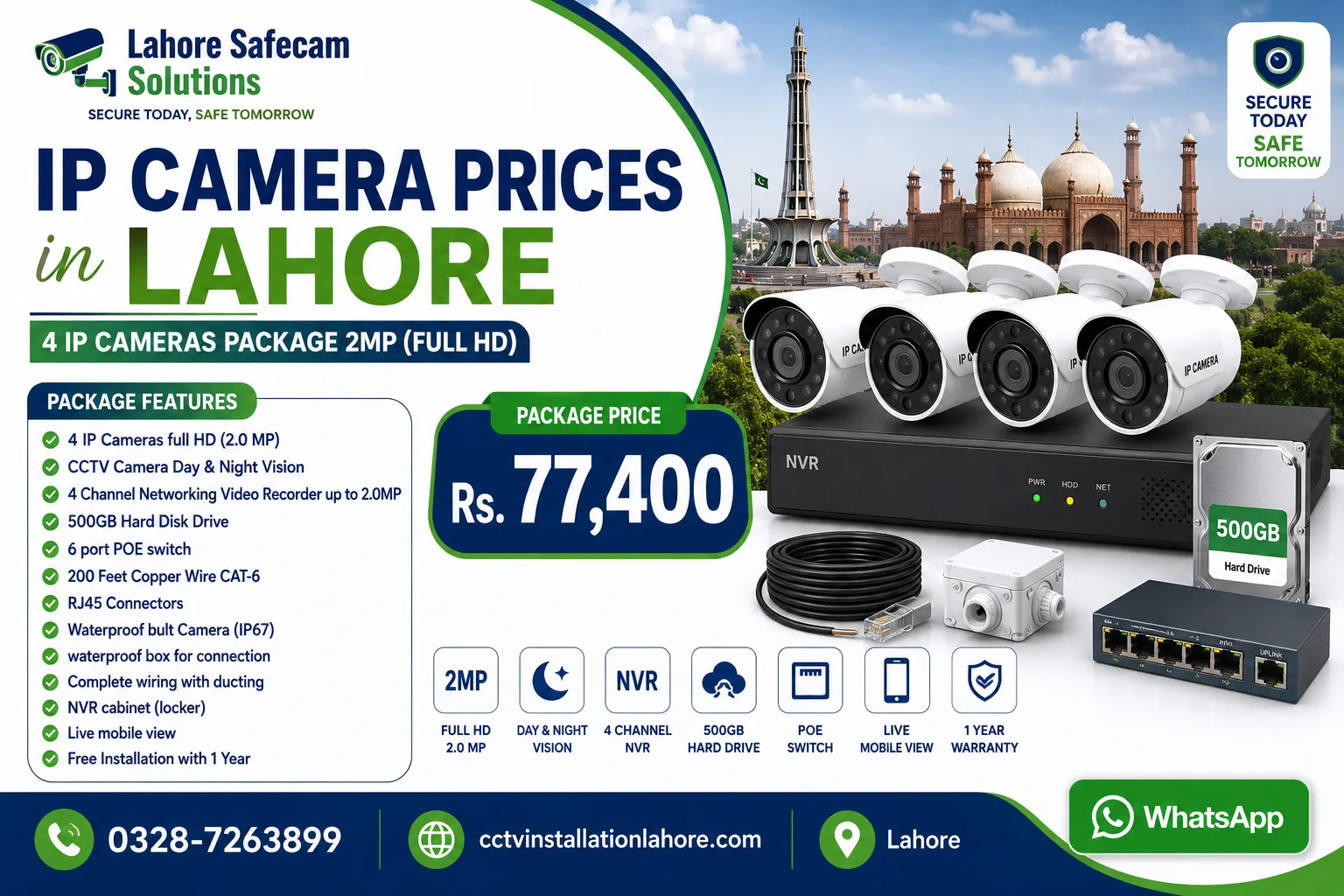
The recording system also deserves careful thought. A DVR generally works with compatible analogue cameras, while an NVR is designed around IP cameras. A clinic with existing analogue cabling may have a practical reason to retain or upgrade a DVR-based system. A new medical centre may prefer an IP setup using an NVR, network cameras and possibly PoE. The better option depends on the existing infrastructure, required image quality, number of cameras, and future expansion. For a detailed technical comparison, see Lahore Safecam Solutions’ DVR vs NVR CCTV guide. When choosing a recorder, it is also worth leaving capacity for growth. A clinic using all eight channels of an eight-channel recorder has little flexibility if a new entrance, floor or diagnostic area needs coverage later.
CCTV Footage Storage Should Have a Clear Purpose
The question is not simply how large the hard drive should be. The better question is:
How much footage does the clinic genuinely need to retain?
Storage depends on camera quantity, resolution, frame rate, bitrate, recording schedule and compression settings. A higher-resolution camera typically creates more data than a lower-resolution camera. Continuous recording also consumes more storage than appropriately configured event-based recording. Just as importantly, clinics should define authorised access.
Who can review recordings? Who can export CCTV footage? Does the receptionist need the same permissions as the clinic administrator? Probably not. International CCTV guidance commonly recommends restricting access to recorded material and keeping footage securely stored. Clear permissions are especially important in environments where recorded video may include patients.
Remote Monitoring Needs Security of Its Own
Remote access can help clinic owners or authorised managers check cameras when they are away from the premises. However, a mobile viewing application should not become the weakest part of the security system. Default passwords should be changed. Accounts should be limited to people who genuinely require access. Access should also be removed when someone’s role changes. For IP-based clinic surveillance systems, secure passwords and properly configured network access are essential. If several people use the same administrator login, it becomes difficult to control who can view or change the system. Convenience should not replace accountability.
Backup Power Protects the Recording Chain
Power interruptions can expose another weakness. Providing backup only to the DVR or NVR may not keep the CCTV system recording. The cameras themselves require power. An IP system may rely on a PoE switch, while remote monitoring can depend on the router or other network equipment remaining operational. A clinic should therefore identify the complete recording chain and decide which components need backup power. Lahore Safecam Solutions explains this in more detail in its CCTV during load shedding guide. After backup power is installed, it should be tested rather than assumed to work. Switch off the mains supply and confirm that cameras remain online, footage continues recording, and remote viewing behaves as expected.
What Does a Suitable Clinic CCTV Setup Look Like?
There is no universal camera package for every clinic. A small practice may need coverage of the entrance, reception, waiting room, corridor and rear access. A larger medical centre may also require cameras around pharmacy areas, staff entrances, diagnostic departments, parking areas, and restricted access points. The correct setup therefore depends on the way people move through the building and where meaningful security risks exist. For CCTV for clinics in Lahore, the strongest design is usually the one that achieves clear coverage while remaining selective. Good security is not measured by how much video you record. It is measured by whether the system gives you useful, reliable footage when you genuinely need it.
Plan Clinic CCTV With Privacy in Mind
Healthcare facilities need more than cameras. They need thoughtful camera placement, clear access permissions, suitable recording equipment, secure CCTV footage storage and reliable backup power. Most importantly, the system should recognise the difference between public movement areas and private clinical spaces. Lahore Safecam Solutions can help clinics and medical centres assess camera positions, recorder requirements, remote monitoring, blind spots, and backup power before installation begins. For professional planning and installation, explore CCTV Camera Installation in Lahore.
Frequently Asked Questions
Where should CCTV cameras be installed in a clinic?
Common locations include the clinic entrance, reception, waiting room, corridors, pharmacy or stock access points, staff entrances, and external access areas. Camera locations should be based on a specific security purpose.
Should CCTV cameras be installed inside consultation rooms?
Consultation and treatment areas involve significant privacy considerations. Clinics should avoid assuming these spaces require CCTV and should obtain appropriate professional or legal guidance before considering surveillance in sensitive clinical areas.
How many CCTV cameras does a medical centre need?
There is no standard number. The requirement depends on the building size, entrances, internal layout, restricted areas, and blind spots.
Can clinic owners monitor CCTV remotely?
Yes. Compatible DVR and NVR systems can support remote monitoring when internet access and secure remote configuration are available.
Is an NVR better than a DVR for clinics?
Not automatically. NVR systems suit IP cameras and modern network-based installations, while a DVR may remain practical where compatible analogue infrastructure is already installed.
Can clinic CCTV continue recording during load shedding?
Yes, provided the cameras, recorder, and any essential network or PoE equipment have correctly planned backup power.
Who should have access to clinic CCTV footage?
Access should be limited to authorised personnel who genuinely need it for security or operational purposes. Permissions should be reviewed periodically rather than shared widely.