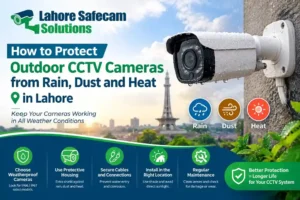
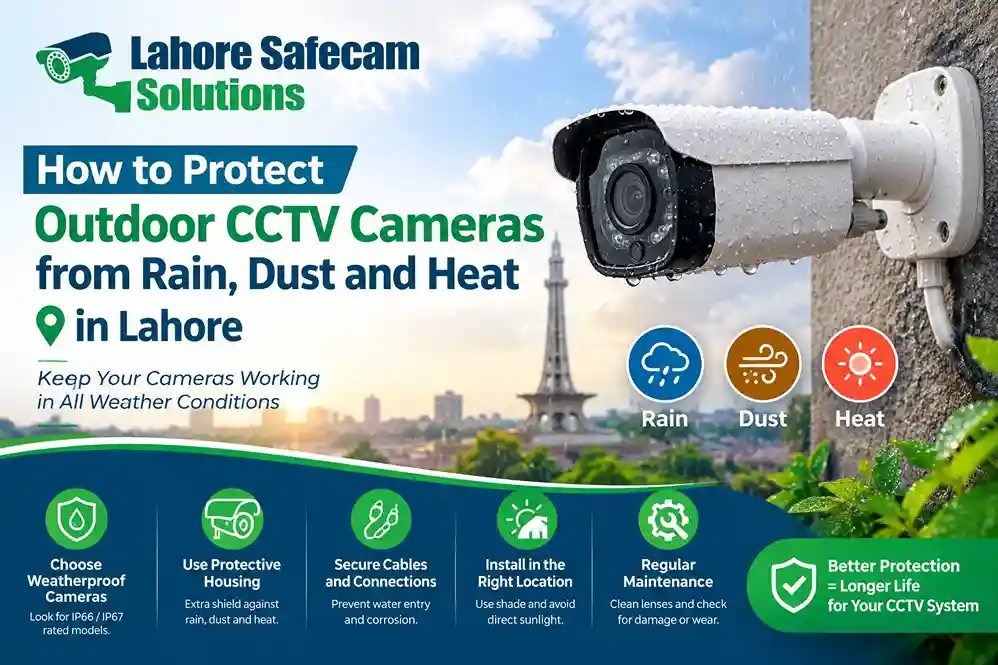
Outdoor CCTV cameras help protect homes, offices, shops, warehouses, and commercial properties. However, Lahore’s hot summers, seasonal monsoon rain, and dusty conditions can affect camera performance if the equipment is not installed and maintained properly. Water entering the camera housing, dust collecting on the lens, and excessive heat can reduce image quality and damage sensitive components. Protecting outdoor CCTV cameras requires the right equipment, suitable installation locations, weatherproof cable connections, and regular maintenance. In this guide, we explain practical ways to protect outdoor CCTV cameras from rain, dust, and heat in Lahore.
Why Do Outdoor CCTV Cameras Need Weather Protection in Lahore?
Outdoor security cameras remain exposed to changing weather conditions throughout the year. Unlike indoor cameras, they must withstand environmental factors that can affect their housing, cables, lenses, and electronic components.
Common problems include:
- Rain and moisture: Poorly sealed connections can allow water to reach cables or electrical components.
- Dust and dirt: Accumulated dust can affect image clarity and block parts of the camera housing.
- Extreme heat: Temperatures outside the camera’s specified operating range can cause overheating or unreliable performance.
- Humidity and condensation: Moisture can form inside unsuitable or damaged camera housings.
- Sunlight exposure: Direct sunlight can create glare and increase the temperature of the camera body.
Choosing weather-resistant equipment and following proper CCTV installation practices can reduce these risks and improve the reliability of your surveillance system.
1. Choose Weatherproof CCTV Cameras for Outdoor Use
The first step is to select a camera designed for outdoor installation. Indoor cameras may not provide adequate protection against rain, dust, and other environmental conditions. When buying an outdoor security camera, check its IP rating, operating temperature range, and installation requirements.
What IP Rating Is Best for Outdoor CCTV Cameras?
IP ratings indicate the level of protection an enclosure provides against solid particles and water under specified test conditions.
- IP65: Provides dust protection and protection against water jets under specified testing conditions.
- IP66: Provides dust-tight protection and protection against powerful water jets.
- IP67: Provides dust-tight protection and protection against temporary immersion under specified test conditions.
For many outdoor installations in Lahore, an IP66-rated camera can be a suitable option. IP67 may be useful for certain environments, but it does not automatically mean a camera is suitable for every outdoor condition. Always check the manufacturer’s specifications. An IP rating for the camera itself does not guarantee that every cable connector, power adapter, or junction box in the installation has the same protection.
2. Install CCTV Cameras in Suitable Locations
Correct camera placement helps protect outdoor CCTV equipment from unnecessary exposure to harsh weather. Where practical, install cameras under roof edges, covered entrances, or other sheltered areas without compromising the required surveillance coverage.
Follow these placement guidelines:
- Avoid locations where rainwater flows directly onto the camera or cable connections.
- Use suitable mounting brackets to secure cameras firmly.
- Keep cameras away from leaking gutters and drainage outlets.
- Check that nearby trees and branches will not obstruct the camera.
- Position the camera to reduce direct sunlight and lens glare where possible.
- Ensure the camera can capture the intended area without creating unnecessary blind spots.
Sheltered installation can reduce exposure to rain and direct sunlight, but it should not replace a camera’s required weather protection. A professional CCTV installer can help select suitable mounting points for homes, offices, and shops.
3. Protect CCTV Cameras from Rain and Moisture
Rainwater can cause problems when it enters cable connections, damaged housings, or unsuitable enclosures. Even a weather-resistant camera can experience faults if its installation is not properly sealed. To improve rain protection, use compatible weatherproof connectors and outdoor-rated junction boxes. Follow the manufacturer’s instructions for sealing cable entry points and mounting the camera.
Additional precautions include:
- Inspect cable glands and seals for damage.
- Ensure junction boxes are suitable for outdoor use.
- Keep connectors protected from direct water exposure.
- Avoid leaving exposed cable joints where rainwater can collect.
- Check the installation after heavy rainfall for visible damage or moisture.
Do not seal drainage or ventilation features that the manufacturer designed to remain open. Incorrect sealing can trap moisture inside the housing instead of preventing it. If you notice condensation inside a camera, repeated image problems after rain, or corrosion around the connectors, arrange a professional inspection.
4. Prevent Dust from Damaging Outdoor Security Cameras
Dust can gradually accumulate on camera lenses, protective domes, and housing surfaces. In dusty environments, this buildup may reduce image clarity and affect the effectiveness of surveillance. Regular cleaning is especially useful for cameras installed near roads, construction areas, parking spaces, and entrances.
Follow these maintenance practices:
- Switch off or safely isolate the equipment according to the manufacturer’s instructions before cleaning.
- Remove loose dust using a clean, soft microfiber cloth or an approved cleaning method.
- Use a lens-safe cleaning product when necessary.
- Avoid abrasive materials that could scratch the lens or protective dome.
- Inspect the housing and seals for cracks or damage.
- Check the camera’s live view after cleaning to confirm that the image is clear.
Avoid spraying water or cleaning chemicals directly onto the camera unless the manufacturer specifically permits it. The best cleaning schedule depends on the amount of dust around the property. Cameras beside busy roads may require more frequent inspection than cameras installed in sheltered residential areas.
5. Protect CCTV Cameras from Lahore’s Summer Heat
High temperatures can affect outdoor surveillance equipment, particularly when a camera is installed in direct sunlight or operates outside its specified temperature range. To protect outdoor CCTV cameras from heat, check the operating temperature stated in the product specifications before installation.
Consider these precautions:
- Install the camera in a suitable location with partial shade where possible.
- Avoid enclosed spaces that prevent the required heat dissipation.
- Use manufacturer-approved mounting accessories and housings.
- Keep ventilation openings clear when the design requires them.
- Inspect power supplies and connectors for signs of overheating.
- Choose equipment designed for the temperature conditions expected at the installation site.
A protective cover should not block ventilation or interfere with the camera’s field of view. If a camera repeatedly shuts down, restarts, or becomes unreliable during hot weather, the cause may involve power supply problems, excessive operating temperatures, or another equipment fault. A technician can check the camera, power source, cable connections, and recorder to identify the problem.
6. Use Weatherproof Cables and Secure Connections
CCTV cables are just as important as the cameras themselves. Poor-quality cables, exposed joints, and unsuitable connectors can cause video interruptions and equipment failures. For outdoor CCTV installation in Lahore, use cables and accessories rated for the installation environment. For IP cameras, inspect Ethernet cable routing, compatible connectors, and Power over Ethernet (PoE) equipment where applicable. For analog systems, check the video cable, power cable, and their respective connections.
Good installation practices include:
- Protecting outdoor cable runs with suitable conduit where necessary.
- Using outdoor-rated cables and compatible connectors.
- Securing cables to prevent movement and accidental damage.
- Keeping cable joints protected from water and dust.
- Avoiding unnecessary sharp bends or excessive tension.
- Following electrical safety requirements for power connections.
Poor connections may cause intermittent video, power loss, or cameras repeatedly going offline. If the same fault returns after basic checks, professional CCTV maintenance may be required.
7. Follow a Regular Outdoor CCTV Maintenance Schedule
Preventive maintenance helps identify minor problems before they affect security coverage. A basic inspection should include the camera lens, housing, mounting brackets, cable connections, night-vision performance, and recorded footage.
| Inspection area | What to check | Why it matters |
|---|---|---|
| Camera lens | Dust, stains, scratches | Maintains image clarity |
| Camera housing | Cracks, damaged seals, moisture | Reduces environmental damage |
| Cable connections | Loose joints, corrosion, exposed wiring | Helps prevent signal and power faults |
| Mounting brackets | Loose screws or movement | Keeps the camera securely positioned |
| Night vision | Infrared performance and image clarity | Supports visibility in low light |
| DVR or NVR | Recording status and storage alerts | Helps confirm footage is being saved |
| Live footage | Image quality and blind spots | Confirms useful surveillance coverage |
Inspect the system periodically and after severe weather. The exact schedule should depend on the location, equipment, and manufacturer’s recommendations. Remember that a camera showing a live image does not necessarily mean it is recording correctly. Always check playback and recording status.
8. When Should You Contact a CCTV Professional in Lahore?
Some problems require more than routine cleaning or visual inspection. Contact a qualified CCTV technician if you notice:
- Water or condensation inside the camera.
- Repeated camera disconnections during hot or rainy weather.
- Blurry images that remain after proper cleaning.
- Damaged outdoor cables or corroded connectors.
- Night-vision failure or frequent system restarts.
- Missing recordings or recurring DVR/NVR faults.
A professional can inspect the installation, check the power supply and connections, test recording performance, and recommend suitable replacement equipment when needed. If you need outdoor CCTV camera installation or maintenance in Lahore, contact our CCTV installation team to discuss your property, camera requirements, and installation options.
Conclusion
Protecting outdoor CCTV cameras from rain, dust, and heat requires suitable equipment, correct placement, weatherproof connections, and regular maintenance. For properties in Lahore, these steps can help maintain clear footage and reduce weather-related faults throughout the year.
Whether you are securing a home, shop, office, or warehouse, choose cameras that match the environmental conditions and ensure that the complete installation follows the manufacturer’s requirements. If your system shows signs of water damage, overheating, or recurring faults, arrange a professional inspection to help maintain reliable security coverage.
Frequently Asked Questions
How can I protect outdoor CCTV cameras from rain in Lahore?
Choose cameras with a suitable weather-resistance rating, use compatible outdoor junction boxes and sealed connectors, and install the equipment according to the manufacturer’s instructions. Inspect the installation after heavy rain.
Which IP rating is suitable for outdoor CCTV cameras?
IP66 is commonly suitable for outdoor cameras exposed to dust and powerful water jets. IP67 offers additional protection against temporary immersion under specified test conditions. Choose a rating based on the installation environment and the manufacturer’s guidance.
How can I protect CCTV cameras from extreme heat?
Select cameras with an appropriate operating temperature range, avoid unnecessary direct sunlight, and follow the manufacturer’s ventilation and mounting requirements. Persistent overheating or shutdowns should be inspected by a technician.
Can dust affect CCTV camera image quality?
Yes. Dust on the lens or protective dome can make footage appear blurry. Clean the camera carefully using a soft microfiber cloth and manufacturer-approved cleaning methods.
How often should outdoor CCTV cameras be cleaned?
Inspect outdoor cameras periodically and after significant dust storms or heavy rain. Clean them whenever dust or dirt affects image quality. Cameras installed near busy roads or construction sites may need more frequent cleaning.
Do weatherproof CCTV cameras require maintenance?
Yes. Weatherproof cameras still need inspection of their lenses, seals, cable connections, mounting brackets, and recording performance. Weather resistance reduces certain risks but does not eliminate wear or installation faults.