Choosing the right CCTV system can be confusing because IP, analog, and wireless CCTV cameras use different technologies to send, record, and access video. Although all three are designed for security monitoring, their installation requirements, image quality, storage options, and networking methods can vary significantly. For homes, offices, shops, warehouses, and other properties in Lahore, understanding these differences can help you select a system that matches your coverage requirements, infrastructure, and budget.
What Is an IP CCTV Camera?
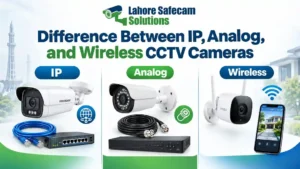
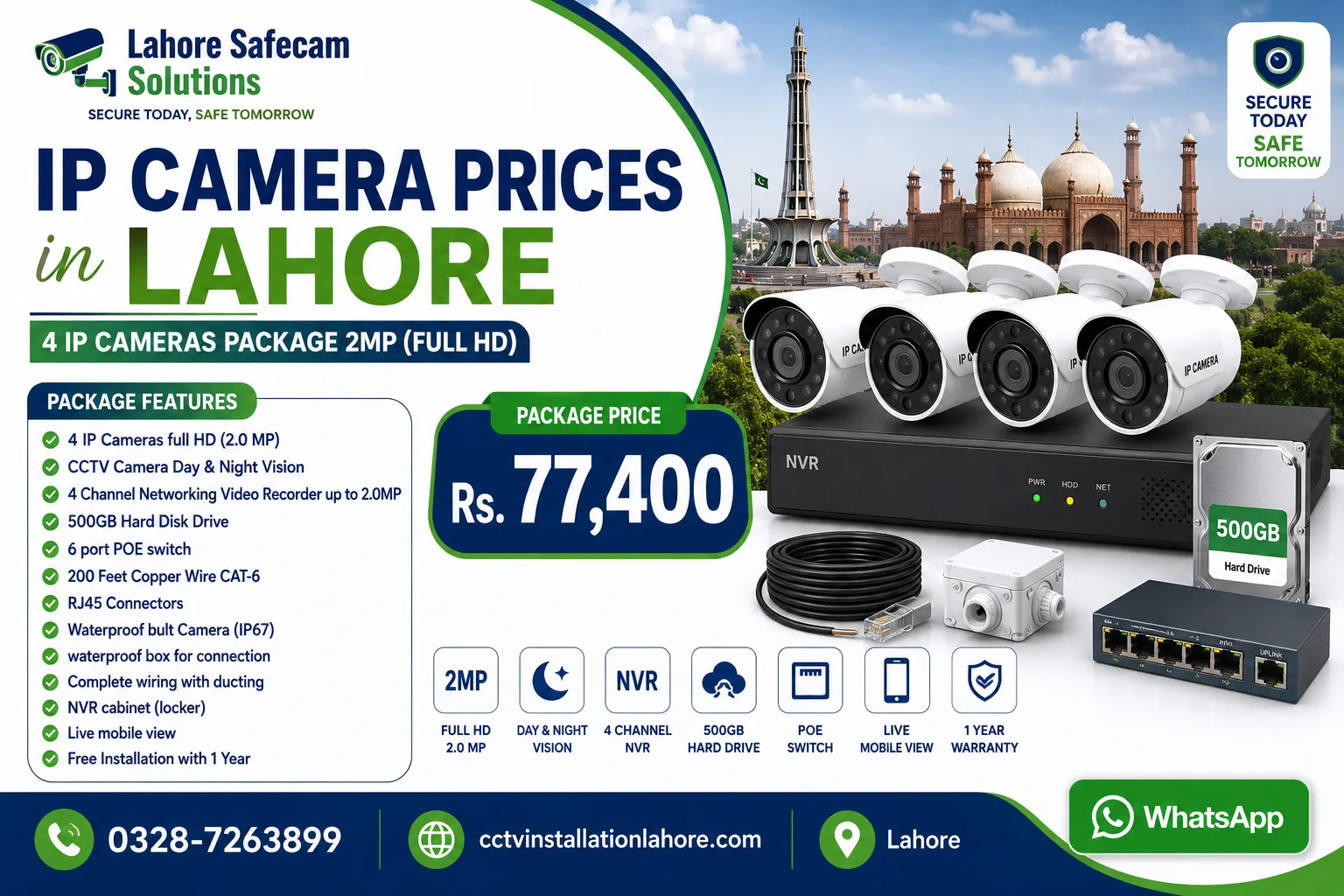
An IP CCTV camera, also called a network camera, captures video digitally and sends it through a computer network. Most IP cameras use Ethernet cables, and many professional systems support PoE (Power over Ethernet). PoE allows one Ethernet cable to carry both power and video data. IP cameras are commonly connected to an NVR (Network Video Recorder) for recording and management. They can also support remote viewing through a mobile application when the system is configured for internet access. One major advantage of IP technology is its ability to provide high-resolution video. Depending on the model, IP cameras may offer 2MP, 4MP, 5MP, 8MP, or higher resolutions.
Key features of IP CCTV cameras
- Digital video transmission
- High-resolution image options
- Ethernet and PoE connectivity
- NVR-based recording
- Remote viewing through mobile apps
- Advanced motion and human detection on supported models
- Flexible network-based installation
For larger properties or installations where detailed footage is important, IP cameras can provide a scalable video surveillance solution.
What Is an Analog CCTV Camera?
An analog CCTV camera sends video through a coaxial cable to a DVR (Digital Video Recorder). Unlike an IP system, the camera itself does not normally communicate with the network in the same way a network camera does. Modern analog technologies can provide considerably better image quality than older analog CCTV systems. Depending on the equipment, technologies such as HD-TVI, HDCVI, and AHD can support HD and higher-resolution surveillance. Analog CCTV can be useful when a property already has coaxial cabling in place. In some situations, upgrading the cameras and DVR can be more practical than completely replacing the existing cabling infrastructure.
Key features of analog CCTV
- Coaxial cable-based video transmission
- DVR recording
- Suitable for many existing CCTV installations
- Different HD analog technologies available
- Straightforward system architecture
- Can support remote viewing when the DVR is connected to a network
Analog systems are often considered for homes, shops, and small businesses where existing cabling can be reused.
What Is a Wireless CCTV Camera?
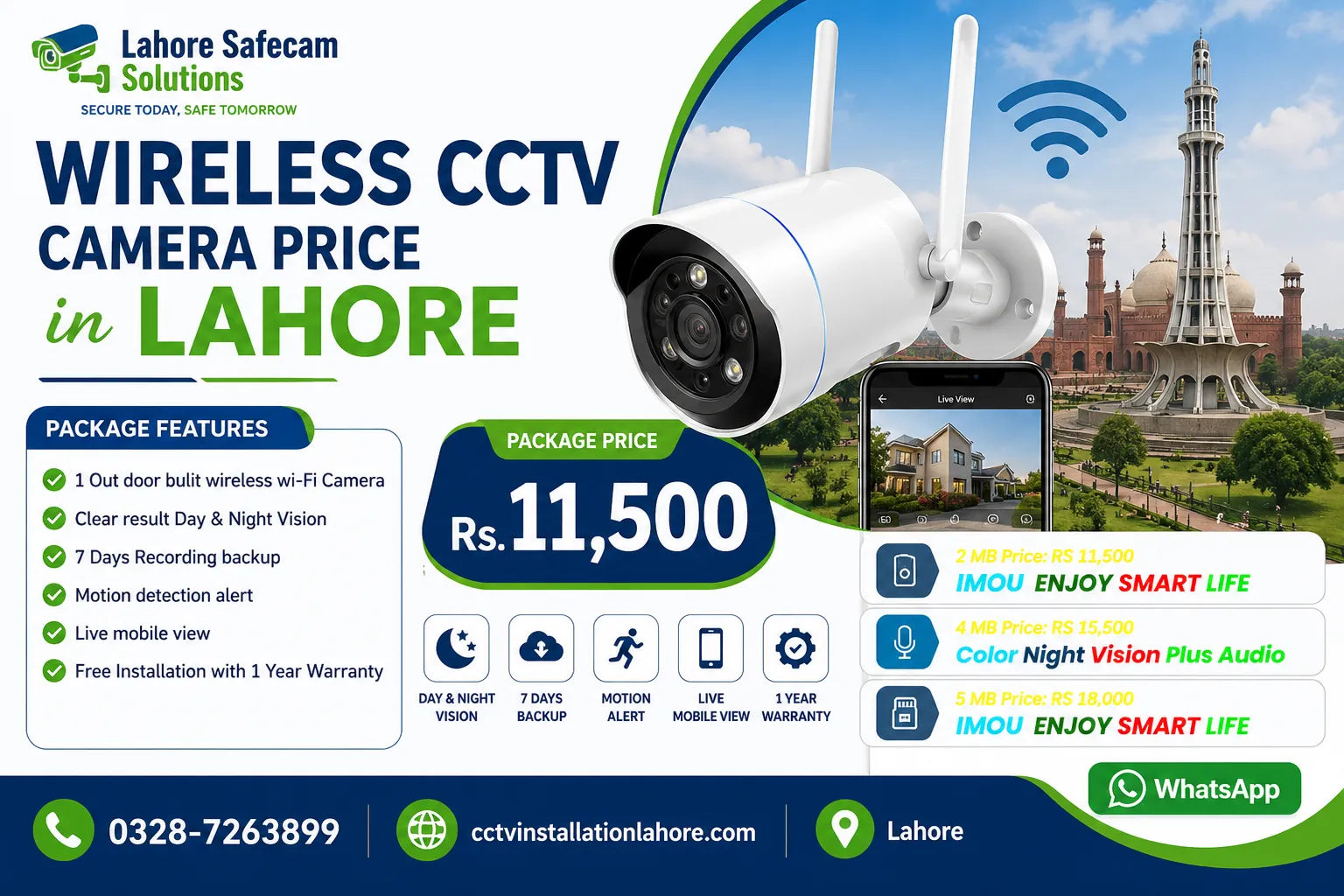
A wireless CCTV camera generally uses Wi-Fi to transmit video instead of sending the video signal through a dedicated Ethernet cable. However, the term “wireless” does not always mean completely cable-free. Most wireless cameras still need a power source. Some models use a power adapter, while battery-powered cameras are available for particular applications. Wireless security cameras can be convenient where running Ethernet or coaxial cable is difficult. They are commonly used for homes, small offices, entrances, indoor areas, and locations where flexible installation is important.
Key features of wireless CCTV
- Wi-Fi-based video transmission
- Easier installation in some locations
- Power connection may still be required
- Mobile app monitoring on supported systems
- Local storage, cloud storage, or NVR options depending on the model
- Useful where traditional cabling is difficult
Wireless performance depends heavily on Wi-Fi coverage, network stability, distance from the router or access point, and physical obstacles.
IP vs Analog vs Wireless CCTV: What Is the Difference?
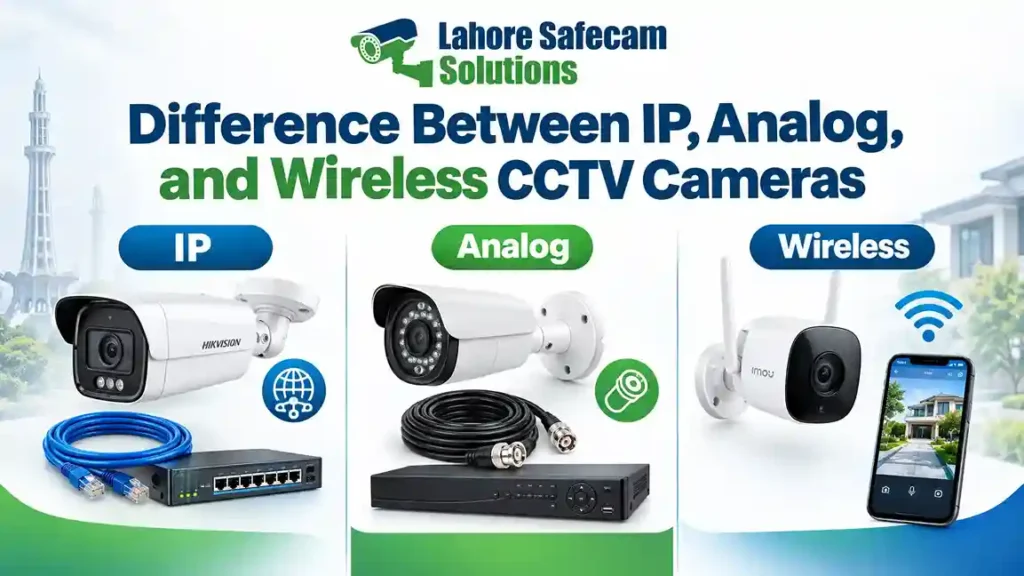
The main difference is how the camera transmits video and connects to the recording system.
| Feature | IP CCTV | Analog CCTV | Wireless CCTV |
| Video transmission | Network/Ethernet | Coaxial cable | Wi-Fi |
| Typical recorder | NVR | DVR | Varies by system |
| Main connection | Ethernet/PoE | Coaxial + power | Wi-Fi + power |
| Image quality | High to very high | HD to high | Depends on model/network |
| Cabling | Ethernet | Coaxial | Minimal video cabling |
| Network dependency | Local network | Mainly DVR connection | Wi-Fi network |
| Remote viewing | Supported | Supported through DVR | Commonly supported |
| Installation flexibility | High | Good with existing cabling | High in suitable Wi-Fi areas |
The right choice depends on the property rather than simply choosing the newest technology.
IP CCTV vs Analog CCTV
The biggest technical difference between IP and analog CCTV is the method used to transmit video. An IP camera sends digital data over a network, usually through Ethernet. An analog camera sends its video signal through coaxial cable to a DVR. IP systems can offer higher resolutions and more advanced network features. They can also be easier to expand when the network infrastructure is already suitable for additional cameras. Analog systems can be practical for properties with existing coaxial cables. Instead of replacing every cable, a property owner may be able to upgrade cameras and the DVR while continuing to use some existing infrastructure. Therefore, the decision should consider both the desired features and the current cabling.
IP CCTV vs Wireless CCTV
IP and wireless cameras can both use network technology, but their physical connection is different. A traditional wired IP camera usually uses Ethernet, often with PoE. This provides a stable connection and can deliver power and data through the same cable. A wireless camera uses Wi-Fi to transmit video. This reduces the amount of network cabling, but the camera still needs reliable wireless coverage and usually a power source. For a new installation where stable connectivity and continuous recording are important, wired network infrastructure can be useful. Wireless cameras can be more convenient where installing cables would be difficult or disruptive.
Is Wireless CCTV Completely Cable-Free?
A wireless CCTV camera normally means that video data is transmitted wirelessly, not that the entire camera operates without wires. Many Wi-Fi cameras still require a power cable. Battery-powered security cameras are available, but battery life, recording settings, environmental conditions, and detection activity can affect how frequently the battery needs charging. This distinction is important when comparing wireless security cameras with PoE IP cameras.
Which CCTV Camera Is Better for a Home?
There is no single CCTV technology that is suitable for every home. A wireless camera may be convenient for indoor monitoring or areas where running cables is difficult. A wired IP system may be more suitable when a homeowner wants several cameras, higher-resolution footage, and reliable continuous recording. Analog CCTV can also be a practical option, particularly when an existing coaxial CCTV system is being upgraded. When planning CCTV installation in Lahore, consider the property layout, camera positions, night-time lighting, network coverage, storage requirements, and future expansion.
Which CCTV System Is Suitable for an Office or Business?
For offices, shops, warehouses, and larger commercial properties, the decision usually involves more than camera resolution.
Consider:
- Number of cameras required
- Coverage area
- Required image detail
- Recording retention
- Network infrastructure
- PoE availability
- Storage capacity
- Remote monitoring requirements
- Indoor and outdoor camera locations
- Future system expansion
For larger installations, IP CCTV can offer useful network-based management and scalability. However, the existing infrastructure and project requirements should be evaluated before choosing a system.
Do IP Cameras Need the Internet?
No. IP cameras do not necessarily need an internet connection to record locally. An IP camera can communicate with an NVR through a local network without internet access. Internet connectivity is generally needed for features such as remote viewing from outside the property, depending on the system configuration. This means a local CCTV system can continue recording even when the internet connection is unavailable, provided the cameras, recorder, network equipment, and power supply are functioning correctly.
Can Wireless CCTV Work Without Wi-Fi?
A typical Wi-Fi CCTV camera needs a wireless network to transmit video. However, some cameras can use other connection methods or record directly to local storage. If reliable connectivity is important, check the camera’s specifications before installation. Wi-Fi signal strength, router placement, walls, floors, and interference can all affect wireless performance.
How to Choose Between IP, Analog, and Wireless CCTV
Before purchasing a CCTV system, focus on the actual security requirements rather than selecting a technology based only on price.
Consider these factors:
1. Property size: Larger properties may require more cameras and stronger infrastructure.
2. Image detail: Higher resolution can help capture more detail, but it also increases storage and bandwidth requirements.
3. Existing cabling: Existing coaxial or Ethernet cables can influence the most practical installation approach.
4. Network availability: Wireless systems depend on reliable Wi-Fi coverage, while IP systems depend on suitable wired network infrastructure.
5. Recording requirements: Consider whether you need continuous recording and how many days of footage should be retained.
6. Remote monitoring: If you want to view cameras through a mobile phone, make sure the selected system supports remote access.
7. Future expansion: Think about whether additional cameras may be installed later.
CCTV Installation in Lahore
For a CCTV project in Lahore, selecting the camera type is only one part of the process. Correct camera placement, cable management, recorder configuration, storage planning, network setup, and testing can all affect the performance of a surveillance system. A professional installation should evaluate the property before recommending equipment. This helps determine whether IP, analog, or wireless CCTV is appropriate for the specific environment.
Final Considerations
IP, analog, and wireless CCTV cameras all have different strengths. IP CCTV uses network-based digital video, analog CCTV uses coaxial video transmission and DVR recording, while wireless CCTV typically uses Wi-Fi for video transmission. Instead of choosing a camera type based only on price or resolution, consider the complete surveillance system, including camera placement, image quality, storage, cabling, network connectivity, recording requirements, and remote viewing. For properties in Lahore, a proper site assessment can help determine which CCTV technology fits the property’s layout and security requirements.
Frequently Asked Questions
What is the main difference between IP and analog CCTV?
IP cameras transmit digital video through a network, usually using Ethernet, while analog cameras send video through coaxial cable to a DVR.
Is IP CCTV better than analog CCTV?
Both technologies can be suitable. IP CCTV generally provides more network-based features and high-resolution options, while analog CCTV can be practical when existing coaxial infrastructure is available.
Is wireless CCTV better than wired CCTV?
Wireless CCTV offers installation flexibility, but performance depends on Wi-Fi coverage and stability. Wired systems generally provide a dedicated physical connection and can be preferable for installations requiring consistent connectivity.
Do wireless CCTV cameras need electricity?
Most wireless CCTV cameras still require power. Wireless normally refers to the video/network connection rather than the power supply.
Does IP CCTV require an NVR?
An NVR is commonly used to record and manage multiple IP cameras, although some IP cameras can also record to SD cards or other storage options depending on the model.
Can CCTV cameras be viewed on a mobile phone?
Yes. Many modern IP, analog DVR, and wireless CCTV systems support mobile viewing when properly configured and connected to the required network or internet service.
Which CCTV camera is suitable for a home in Lahore?
The choice depends on the home’s layout, coverage requirements, network availability, budget, and recording needs. Wireless cameras can suit locations where cabling is difficult, while wired IP or analog systems can be appropriate for more comprehensive installations.