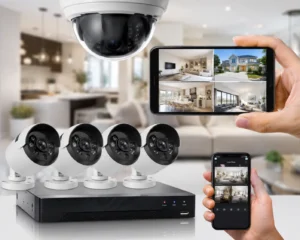
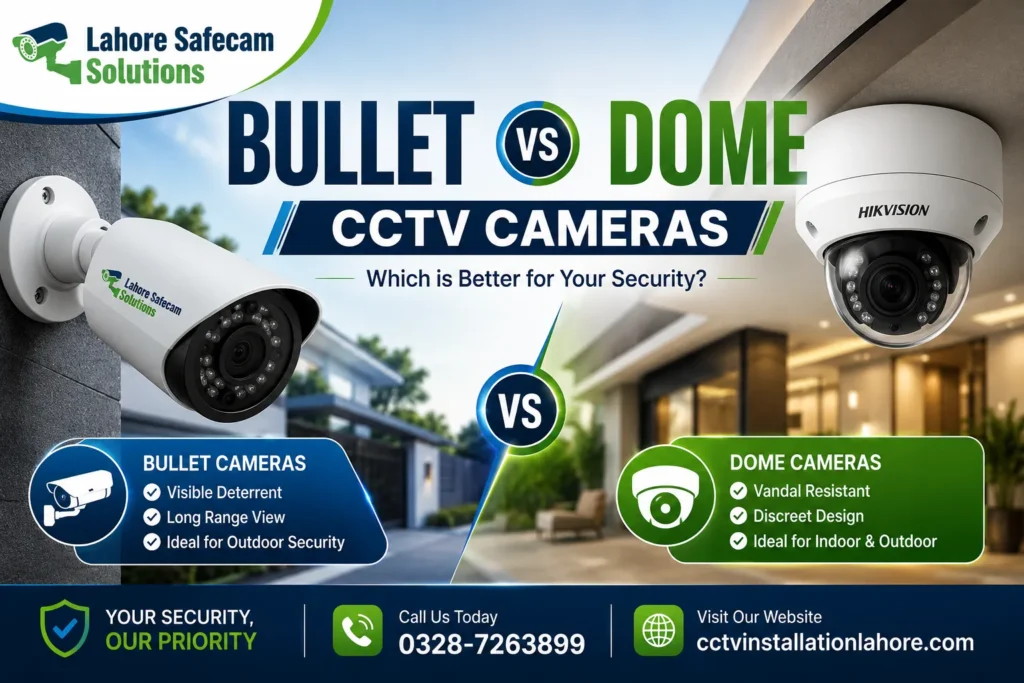
Picture two cameras protecting the same house. One is clearly visible above the main gate, pointing towards the street. The other sits quietly beneath a porch ceiling, covering the entrance without drawing much attention. Both may record excellent footage, yet they are solving different security problems. That is the useful way to approach bullet vs dome CCTV cameras. The shape of the housing does not decide whether a camera is good or bad. What matters is where it will be installed, what it needs to see, how exposed it will be, and whether you want the camera to stand out or blend into the property. For Lahore homeowners, those decisions also need to consider outdoor heat, dust, rain, night-time lighting and the layout around gates, driveways and boundary walls.
The Quick Answer: Bullet or Dome?
- A bullet camera is often a strong choice when you want visible, directional surveillance across an outdoor area such as a gate, driveway, side passage or boundary.
- A dome camera can work particularly well under porches, ceilings and covered areas where a compact appearance and broad coverage are useful.
Some dome cameras are designed for demanding outdoor installations, while others are installed indoors. The housing style should never be used as a substitute for checking the camera’s actual specifications.
At the Main Gate, Visibility Can Be an Advantage
The entrance to a Lahore home is usually one of the first areas considered when planning CCTV. Here, a bullet camera often makes sense. Its elongated body makes the direction of surveillance easy to see. Someone approaching the property can usually recognise that the entrance is being monitored. That visibility can be useful where CCTV is intended not only to record activity but also to act as an obvious security measure.
Bullet cameras can also be positioned to focus on a defined area such as a gate opening, driveway or street-facing approach. That does not mean every gate automatically needs one. If the camera is mounted where people can easily reach it, or where its long body is vulnerable to accidental knocks, another housing design may be more practical.
Under a Porch, the Priorities Change
Move from the boundary wall to the covered entrance, and the decision looks different. A dome camera can sit neatly beneath a porch or ceiling without projecting far from the mounting surface. For homeowners who prefer security equipment to look integrated rather than prominent, this design can be attractive.
A dome-style camera may also suit areas where people walk beneath or around the camera rather than approaching from one fixed direction. For example, an entrance lobby, covered car porch or internal staircase may benefit from a camera positioned to observe movement across a wider nearby area. The final field of view still depends on the lens and camera specification. A dome housing does not automatically mean wide-angle coverage.
Does a Bullet Camera See Further Than a Dome Camera?
A common mistake in bullet vs dome CCTV cameras comparisons is to assume that camera shape determines viewing distance. Viewing performance is influenced by factors such as:
- Lens focal length
- Image sensor
- Resolution
- Lighting
- Mounting position
- Infrared capability
- Camera configuration
A bullet camera with an appropriate lens may be useful for monitoring a longer driveway or boundary line, but a dome camera with similar optical specifications could potentially cover a comparable distance. The appearance of the camera tells you very little about image quality on its own.
What About CCTV Image Quality?
Two cameras can look completely different from the outside and still use similar internal imaging technology. A 4MP dome camera is not automatically clearer than a 4MP bullet camera, and the reverse is also true. When comparing image quality, look beyond the housing. Consider how much detail is required at the actual monitoring distance. A camera covering general movement around a porch may not need the same setup as one intended to help identify people approaching a gate from further away. For residential CCTV, resolution should support the purpose of the camera rather than become a numbers competition. A well-positioned 2MP, 4MP or 5MP camera can often be more useful than a higher-resolution unit installed in the wrong place.
Outdoor Use Is About the Rating, Not the Shape
Bullet cameras are strongly associated with outdoor security, partly because their design is common on walls, gates and property boundaries. But bullet does not automatically mean weatherproof. Likewise, a dome camera is not necessarily limited to indoor use. Before installing any camera outdoors in Lahore, check whether the particular model is designed for environmental exposure. Its manufacturer specifications should state suitable operating conditions and protection against factors such as dust and water ingress. IP ratings such as IP66 or IP67 are commonly seen on outdoor security cameras, but buyers should check the exact rating of the model they are considering. A camera’s housing, seals and installation quality matter far more than whether the product is shaped like a bullet or dome.
Lahore Heat and Dust Deserve Attention
Outdoor CCTV equipment in Lahore may spend long periods exposed to high temperatures, direct sunlight and dust. That makes camera placement important. Installing a suitable outdoor security camera beneath some protection can reduce unnecessary exposure, provided the position still gives a useful view. Cameras should also be installed according to their stated operating temperature and environmental specifications.
Dust on the lens or front cover can gradually reduce image clarity, especially when combined with moisture. Dome cameras can develop poor night footage if the cover becomes dirty or infrared light reflects from contamination around the housing. Bullet cameras are not immune either. A dusty lens or infrared window can affect their footage as well. Routine inspection and cleaning are therefore part of maintaining reliable outdoor CCTV.
Which Camera Is Better for Night Vision?
Again, housing style does not decide the winner. Both dome and bullet cameras are available with infrared night vision, low-light technology and colour night-vision features. What matters is how the camera performs in the place where it will actually be installed. A bright light positioned directly beside the camera can affect the scene differently from a dark boundary wall. Nearby reflective surfaces can also influence infrared footage.
For example, fitting a camera extremely close to a pale wall may cause unwanted infrared reflection at night. The sensible approach is to assess night-time conditions at the installation point rather than buying a camera solely because its packaging advertises a long infrared range.
When Tamper Resistance Matters
Suppose a camera is installed at a relatively low height in a porch, shop entrance or shared residential area. Now physical interference becomes part of the decision. Some dome-style cameras are available in robust, vandal-resistant housings that make them useful where the equipment may be within reach. Their compact shape can also make them less easy to knock accidentally than a camera projecting further from the wall.
However, not every dome camera is vandal-resistant. If tamper protection matters, look for the actual construction and impact rating of the model instead of assuming the shape provides protection. The same applies to bullet cameras. Secure mounting, cable protection, and sensible installation height can all reduce unnecessary risk.
Think About Camera Direction
One practical difference between the two designs is how obvious their viewing direction appears. With most bullet cameras, people can immediately see where the camera is pointing. That can be useful at a front gate or driveway when visible deterrence is part of the security plan. A dome housing can make the direction less obvious at a glance, depending on the design. This may be useful in areas where you want the surveillance equipment to look more discreet. Neither approach is automatically better. Some homeowners want visitors to notice CCTV as soon as they approach the property. Others prefer cameras that blend more naturally with ceilings and building finishes. Security requirements and property appearance can both influence the choice.
A Typical Lahore Home May Need Both
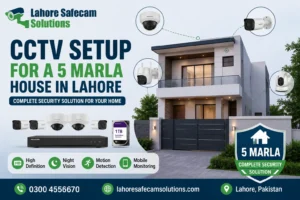
There is no reason a home security system has to use only one camera style. In fact, mixing housing types can make more sense. A practical residential CCTV installation might use:
- Main gate: bullet camera focused towards the entrance and approach.
- Car porch: dome or turret camera covering vehicles and movement close to the house.
- Side passage: bullet camera positioned along the narrow route.
- Main doorway: compact dome camera beneath a covered entrance.
- Stair or internal access: dome camera where indoor monitoring is required.
The camera style changes because the security task changes. This is more effective than selecting one design and installing it everywhere for consistency.
What About Turret Cameras?
Homeowners comparing dome and bullet cameras may also come across turret cameras. A turret camera has a ball-and-socket style body that allows the camera module to be aimed within its mounting base. It can offer a compact appearance without a transparent dome cover. Turret cameras are increasingly common in residential CCTV because they can suit entrances, porches and outdoor positions depending on the particular model. They should be evaluated in exactly the same way as other cameras: by image performance, lens, environmental rating, night capability and installation position rather than shape alone.
Should You Choose IP or Analogue Cameras?
The dome camera vs bullet camera decision is separate from whether the system uses IP or analogue technology. Both housing styles can be found in different CCTV technologies. IP cameras may connect through Ethernet and can use Power over Ethernet where supported. Analogue CCTV cameras commonly connect back to a DVR through compatible cabling. The recorder, network, storage and cabling should therefore be planned alongside the cameras. Do not choose a bullet camera and then discover that it is incompatible with your existing DVR, NVR or cabling system. Housing comes after system compatibility.
A Simple Way to Choose the Right Camera
Rather than starting with a product catalogue, stand in the location where the camera will be installed.
What must the camera see?
A person at the gate, a parked vehicle, a broad porch or a narrow passage?
How far away is the important area?
General nearby monitoring and longer-distance identification may need different lenses.
How exposed is the camera?
Consider rain, dust, sunlight and physical access.
Should the camera be noticeable?
A clearly visible bullet camera and a compact dome installation create different visual effects.
Once those answers are clear, selecting the right CCTV camera becomes much easier.
Bullet vs Dome CCTV Cameras: Which Should Lahore Homeowners Choose?
Neither camera design wins every situation. For clearly visible outdoor surveillance along gates, driveways, boundary walls and passages, a bullet camera can be an excellent choice when the model is suitable for the environment. For covered entrances, ceilings, indoor spaces and locations where a compact appearance is preferred, a dome camera can work extremely well. But the strongest home CCTV systems rarely depend on camera shape alone. Lens choice, camera resolution, mounting height, viewing angle, night-time lighting, weather resistance, recording equipment and power backup all affect how useful the footage will actually be.
Match the Camera to the Property, Not the Trend
Buying CCTV based on appearance alone can lead to poor coverage even when the camera itself is good. A gate may need a visible, focused camera. A porch may benefit from something compact. A side passage could require a narrow directional view, while an indoor entrance may need broader nearby coverage. Lahore Safecam Solutions can help property owners choose camera types according to actual viewing requirements, installation conditions, and existing CCTV infrastructure. By assessing each position separately, a home security system can use bullet, dome, turret or other suitable cameras where each design makes the most practical sense.
Frequently Asked Questions
Are bullet cameras better for outdoor CCTV?
Bullet cameras are commonly used outdoors, but their suitability depends on the specific model’s weather protection and operating specifications. Camera shape alone does not guarantee outdoor durability.
Can dome CCTV cameras be installed outside?
Yes, when the particular dome camera is designed for outdoor installation. Check its environmental and ingress-protection specifications before fitting it in an exposed location.
Which is better for a main gate, bullet or dome?
A bullet camera can work well at a main gate because its viewing direction is obvious and it can be positioned towards a defined approach. The final choice should still depend on lens, distance, lighting and mounting position.
Do dome cameras have a wider viewing angle?
Not automatically. Viewing angle depends primarily on the camera lens and sensor configuration rather than the dome housing.
Are bullet cameras better at night?
Not simply because they are bullet cameras. Night performance depends on infrared capability, low-light technology, lighting conditions, and how the camera is positioned.
Which CCTV camera is harder to tamper with?
Some dome cameras are available with vandal-resistant housings, but this feature is model-specific. Installation height, mounting quality and cable protection also affect tamper resistance.